A commercial property’s appearance and functionality can influence how employees, customers, visitors, and business partners experience a company. From the condition of the building exterior to the comfort of outdoor gathering areas, every detail contributes to the overall impression a business creates. Property improvements can also address practical concerns, such as accessibility, weather protection, security, and ongoing maintenance.
However, deciding which projects to prioritize requires more than choosing upgrades that look attractive. Business owners should consider how each improvement supports daily operations, fits the property’s layout, and accommodates the people who use the space. A thoughtful improvement plan can help businesses make better use of their available space while creating a more welcoming environment. Whether you are updating an existing property or planning improvements for a recently acquired building, focusing on both appearance and practicality can make a meaningful difference over time.
Evaluate Your Property Before Planning Exterior Improvements
Before investing in upgrades, walk around your commercial property and evaluate its current appearance, layout, and functionality. Look at the building from the perspective of employees, customers, and visitors. Consider whether entrances are easy to identify, landscaping is maintained, and outdoor areas feel welcoming. This initial assessment can help you identify improvements that will have the greatest impact.
Decorative features can also make a property more distinctive. For example, luxury stone water fountains may create an attractive focal point near an entrance, courtyard, or landscaped gathering area. However, selecting the right feature requires considering more than its appearance.
Evaluate these factors before making a decision:
- Available space and the surrounding landscape.
- Water access, drainage, and electrical requirements.
- Materials, finishes, and compatibility with the building’s design.
- Cleaning and maintenance requirements.
- Potential effects on pedestrian access and visibility.
Create a list of proposed improvements and organize them by priority. Addressing functional concerns before adding decorative features can help you use your budget more effectively.
Plan Structural Changes Around Your Property’s Needs
Some commercial property improvements require modifying existing structures rather than simply adding new features. Concrete surfaces, foundations, walkways, and paved areas may need adjustments to accommodate updated layouts, equipment, or utility installations. Identifying these requirements early can help prevent scheduling conflicts and unnecessary construction work.
Depending on the project, cement cutting services may be needed to create openings, modify concrete surfaces, or provide access for new installations. Before work begins, consult qualified professionals about the proposed modifications and any structural considerations. It is also important to identify underground utilities and existing building systems that could be affected.
Prepare for this type of project by:
- Establishing the exact location and dimensions of the proposed cuts.
- Reviewing available construction plans and utility information.
- Confirming whether permits or inspections are required.
- Discussing dust control, noise, and debris removal.
- Coordinating the work with other contractors.
Plan the schedule around business operations whenever possible. Clear communication about restricted areas, access changes, and expected completion dates can help employees and visitors navigate the property safely.
Improve Building Access and Safety With Thoughtful Design
Entrances, stairways, ramps, balconies, and elevated walkways should be designed with the people using them in mind. If these areas are difficult to navigate or lack appropriate support, they may create unnecessary safety concerns. Review the property’s access points and identify locations where improvements could make movement more convenient.
Installing metal railings can provide additional support along stairs, walkways, and other elevated areas. When selecting a design, consider the building’s architecture, expected usage, and applicable construction requirements. Materials and finishes should also be appropriate for the property’s environment and maintenance needs.
Before installation, consider:
- Whether the railing provides adequate support and clearance.
- How its height and spacing relate to applicable requirements.
- Which materials can withstand expected wear and exposure.
- Whether the design complements nearby architectural features.
- How the installation will affect existing walkways and access routes.
Inspect existing railings for corrosion, loose connections, and visible damage. Addressing these concerns promptly can help maintain the property’s functionality and appearance. Work with qualified professionals to verify that new installations meet relevant safety and accessibility standards.
Establish Clear Boundaries Without Sacrificing Curb Appeal

Commercial properties often need designated areas for parking, deliveries, outdoor equipment, employees, and visitors. Clearly defining these spaces can improve organization and help prevent unauthorized access. However, boundary features should also complement the property’s appearance rather than making the exterior feel uninviting.
Iron fencing can provide a durable boundary around entrances, landscaped areas, and other sections of a commercial property. Available designs vary in height, style, finish, and visibility, allowing businesses to consider both practical requirements and architectural preferences.
When planning a fencing project:
- Identify the areas that need to be enclosed or restricted.
- Consider visibility near driveways and pedestrian entrances.
- Evaluate gate placement and access requirements.
- Compare materials and finishes based on maintenance needs.
- Review local zoning requirements and applicable restrictions.
Think about how employees, delivery drivers, customers, and visitors will move around the property once the fencing is installed. Gates should be positioned conveniently without interfering with regular operations. Periodic inspections can also help identify rust, damaged sections, and loose hardware before they become larger concerns.
Create Comfortable Spaces for Employees and Visitors
Outdoor gathering areas can give employees a place to take breaks while providing visitors with a more comfortable environment. However, an outdoor space should offer more than attractive furniture. Consider privacy, ventilation, shade, accessibility, and how frequently the area will be used.
A screen room may be a useful addition when a business wants to create a sheltered gathering space while maintaining an outdoor atmosphere. Depending on its design, it can provide an area for informal meetings, employee breaks, or waiting visitors. Before choosing a layout, evaluate the available dimensions and how the structure will connect to the existing building.
Consider these details:
- Screening materials and their durability.
- Ventilation and access points.
- Lighting and electrical requirements.
- Seating arrangements and furniture storage.
- Cleaning and maintenance needs.
You should also think about how the space will function throughout the year. Weather conditions, sunlight, and seasonal temperatures may affect how often employees and visitors can use it. Planning around these factors can help you create an outdoor area that serves a practical purpose.
Add Weather Protection to Outdoor Business Areas
Outdoor entrances, walkways, and seating areas may be exposed to direct sunlight and changing weather conditions. Providing appropriate overhead coverage can make these spaces more comfortable while protecting certain areas from the elements. Start by identifying where employees and visitors spend time outdoors and which locations would benefit most from additional protection.
Commercial canopies can provide coverage over customer entrances, outdoor seating, and designated waiting areas. When evaluating options, consider the structure’s dimensions, materials, support requirements, and compatibility with the building.
Before selecting a design, review:
- The amount of coverage needed.
- Expected exposure to sunlight, rain, and wind.
- Drainage and water runoff requirements.
- Structural supports and installation specifications.
- Potential effects on signs, lighting, and building visibility.
It is also important to consider pedestrian movement and access for service vehicles. A canopy should improve the property’s functionality without creating obstacles or restricting entrances. Coordinate installation with other exterior projects to maintain a consistent appearance and avoid disrupting business activities more than necessary.
Make Outdoor Areas More Versatile Throughout the Year
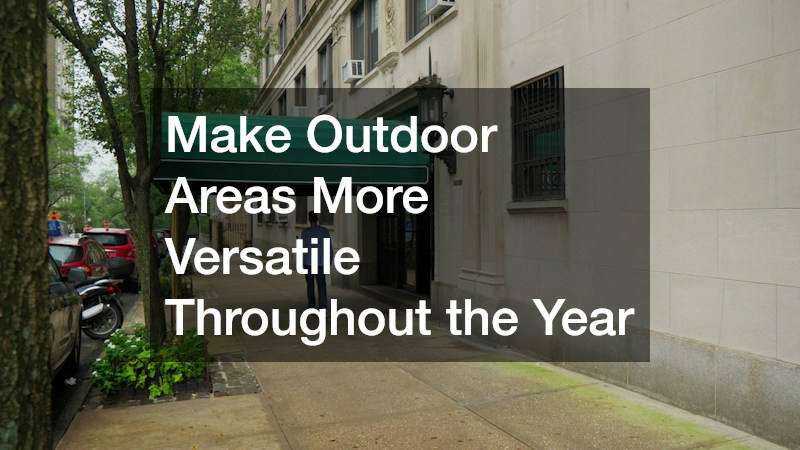
A well-designed outdoor area can support employee breaks, customer seating, informal meetings, and business gatherings. However, direct sunlight can make some patios and walkways uncomfortable during certain parts of the day. Adding shade can help businesses make better use of these spaces.
Awnings are one option for providing coverage over windows, entrances, and outdoor seating areas. Depending on the design, they may be fixed or retractable. Compare available materials, colors, operating mechanisms, and mounting requirements before selecting a system.
When planning an installation:
- Observe how sunlight reaches the area throughout the day.
- Measure the space that needs coverage.
- Consider the building’s exterior colors and architectural style.
- Review maintenance and cleaning requirements.
- Determine whether manual or motorized operation is more practical.
Think about how the improvement will affect nearby windows, walkways, and outdoor furniture. An appropriately positioned awning can provide useful shade without interfering with access or visibility. Regular inspections can help identify material wear, loose connections, and other issues that require attention.
Maintain Clean Exterior Surfaces and Professional Appearance
Even a well-designed commercial property can lose its appeal when exterior surfaces accumulate dirt, stains, and debris. Sidewalks, parking areas, building facades, and entrances all contribute to the property’s overall appearance. Establishing a cleaning routine can help maintain these surfaces and create a more welcoming environment.
Professional pressure washing services may be appropriate for removing accumulated dirt from compatible exterior materials. However, not every surface should be cleaned using the same pressure or method. Delicate finishes, painted areas, and certain building materials may require gentler treatment.
Before scheduling cleaning, consider:
- Which surfaces need attention.
- Whether the materials can withstand pressure washing.
- What cleaning solutions and equipment will be used.
- How runoff and nearby landscaping will be protected.
- When the work can take place with minimal disruption.
Ask service providers about their cleaning methods and experience with similar properties. You should also investigate recurring sources of dirt, such as drainage problems or heavy foot traffic. Addressing these issues alongside routine cleaning can help maintain the exterior for longer.
Coordinate Exterior Details for a Consistent Appearance
Individual exterior upgrades should work together rather than making a commercial property look like a collection of unrelated design choices. Building entrances, windows, signage, landscaping, and architectural finishes all contribute to the overall appearance. Before selecting decorative features, consider how they will complement existing elements.
Shutter installation may be worth considering when decorative or functional shutters suit the building’s architectural style. Available options vary in materials, colors, dimensions, and intended purposes. Some are primarily decorative, while others may provide specific functions related to privacy or light control.
Evaluate the following details:
- Whether the shutter design complements the building.
- How its materials coordinate with exterior finishes.
- Whether the dimensions suit the existing windows.
- What mounting and installation requirements apply.
- How much maintenance the selected materials need.
You should also consider how shutters will coordinate with other improvements, including railings, fencing, and overhead coverage. Consistency does not mean every feature must match exactly. Instead, choose finishes and designs that create a balanced appearance while preserving the property’s character.
Plan Business Events That Help Employees Enjoy the Property

Commercial property improvements can support more than daily business operations. Outdoor gathering areas, shaded seating, and landscaped spaces may also provide opportunities for employee events and informal company activities. These gatherings can give employees a chance to interact outside their usual work routines.
When organizing an outdoor celebration, company picnic catering can simplify food planning and help accommodate different preferences. Start by estimating attendance, establishing a budget, and identifying any dietary requirements. Then coordinate the menu and service arrangements with the event’s location and schedule.
Prepare for a successful gathering by:
- Selecting a convenient date and time.
- Confirming seating, shade, and restroom access.
- Planning food service and waste disposal.
- Arranging activities appropriate for the available space.
- Communicating parking and event access details.
Ask employees for feedback after the event to identify what worked well and what could be improved. You can use those suggestions when planning future gatherings. Making practical use of outdoor spaces can help businesses get more value from their property improvements while creating enjoyable experiences for employees.
Commercial property improvements require careful planning, but the results can extend beyond a more attractive building exterior. Thoughtful upgrades can improve access, support employee comfort, create welcoming spaces for visitors, and make outdoor areas more functional. The most effective projects begin with an understanding of the property’s current condition and the needs of the people who use it. From there, business owners can prioritize improvements, establish realistic budgets, and coordinate work around daily operations.
It’s not necessary to complete every project at once. Addressing essential repairs first and gradually introducing additional features can make the process easier to manage. Regular inspections and maintenance will also help preserve the results of completed work. By approaching property improvements with both appearance and functionality in mind, you can create a professional environment that supports your business and leaves a positive impression on employees, customers, and visitors.